













There is a number in the Institute of Contemporary Economics position paper that deserves more attention than it has gotten so far. From roughly 2020 to the present, distribution system losses in Iloilo City dropped from somewhere above 30 percent to approximately 6 to 7 percent. That is not a rounding error. That is the difference between a grid that hemorrhages electricity before it ever reaches a socket and one that actually does what it is supposed to do.
System losses function, in effect, as a silent surcharge on every household and business connected to the grid. When a distribution utility loses 30 percent of what it transmits — to line leakage, aging equipment, non-technical theft — that cost does not disappear. It gets embedded in the rates consumers pay. The reduction MORE Electric and Power Corporation achieved in Iloilo City is, in practical terms, a multi-year infrastructure dividend that ratepayers are still collecting.
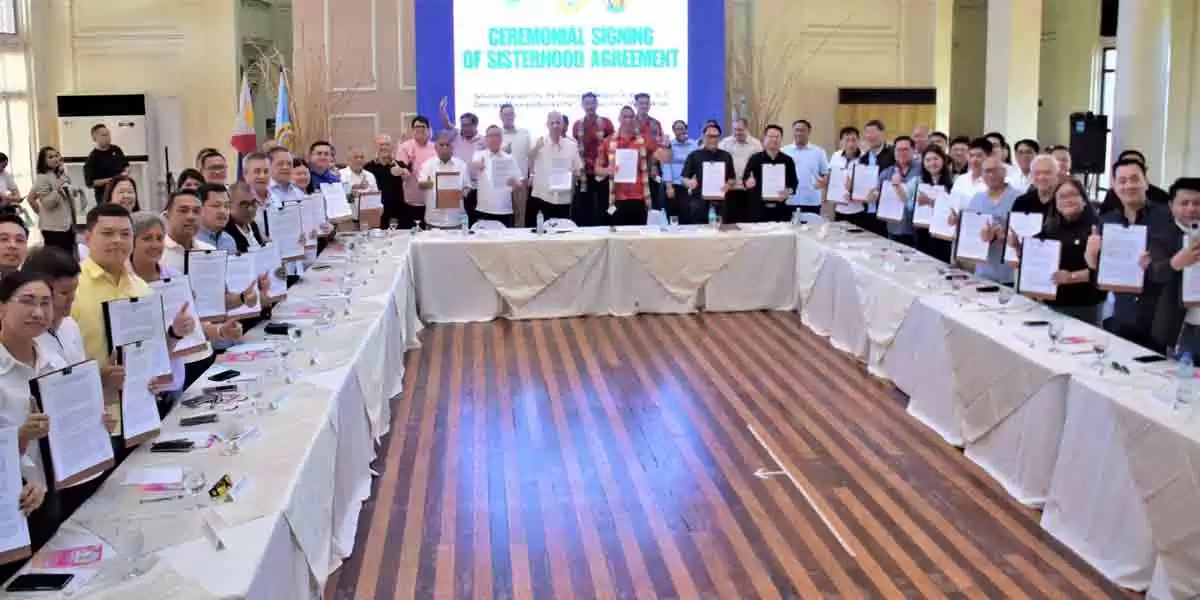
House Bill 7647, now heading to the Senate after clearing the House 247-4, would extend MORE Power’s franchise to seven municipalities in Iloilo’s 1st District: Igbaras, Tubungan, Oton, Tigbauan, Guimbal, Miag-ao, and San Joaquin. These towns are currently served by Iloilo I Electric Cooperative, Inc. (ILECO 1). The bill, authored by Rep. Janette Garin, arrives at the Senate with barangay and municipal resolutions from the affected towns explicitly asking for the change. That matters. Local government units do not typically pass resolutions requesting a franchise transfer unless there is a genuine, felt gap between what they have and what they need.
The ICE position paper, submitted to the Senate Committee on Public Services on March 6, 2026, argues the case in economic terms: the municipalities of the 1st District are functionally integrated with Iloilo City through commuting patterns, agricultural supply chains, tourism, and logistics. Oton and Tigbauan alone anchor significant portions of the province’s food processing and coastal trade activity. San Joaquin and Miag-ao draw visitors to heritage sites that are, frankly, “undersupported” by current infrastructure. Energy unreliability in these towns does not stay in these towns — it ripples into the city’s own supply chains and cost structures.
The ICE paper is careful to credit electric cooperatives for what they actually accomplished: rural electrification in the Philippines was, by most regional standards, a genuine success story. ILECO 1 and its counterparts brought electricity to communities that would otherwise have waited decades for grid access under a purely market-driven model. That history should not be rewritten.
But the challenge these towns now face is not one of access. It is one of reliability, scale, and capital. The ICE paper is direct about the structural gap: cooperatives face institutional constraints in mobilizing the kind of private financing that allowed MORE Power to fund its rehabilitation program. The multi-billion peso network overhaul in Iloilo City — substations, feeders, distribution lines, monitoring systems — was made possible by corporate financing structures that cooperatives, by their nature, cannot easily replicate. That is not a moral failing. It is a structural reality that Philippine energy policy has not yet adequately addressed.
Which brings us to the harder question — one the Senate should ask out loud rather than sidestep. Is what is happening in Iloilo’s 1st District a local franchise matter, or is it the leading edge of something much larger?
The ICE paper describes the 2020 Iloilo City transition as “one of the most significant institutional reforms in urban electricity distribution in the Philippines in recent years.” That language is not accidental. It is framing — and it is framing that points toward replication. If the model works here, the implicit argument goes, it should work elsewhere.
That may well be true. But the mechanism matters enormously. Legislating franchise transitions town by town, through individual congressional bills, is a process that is inherently susceptible to political timing, patron-client dynamics, and uneven scrutiny. The Department of Energy and the Energy Regulatory Commission are better positioned than Congress to assess, in a systematic and technically grounded way, which distribution areas are genuinely underperforming and what the appropriate institutional response should be. A national framework — not a series of discrete franchise bills — is what a rational energy transition requires.
None of this is an argument against House Bill 7647 specifically. The performance record in Iloilo City is real. The economic integration argument is sound. The resolutions from local governments reflect a genuine constituency demand. If the Senate conducts its hearings rigorously — examining ILECO 1’s own performance data, transition safeguards for cooperative employees, and rate protection mechanisms for consumers — there is a reasonable case to be made for the expansion.
The Senate should resist the impulse to treat this bill as simply a local franchise matter and move on. The Philippines has approximately 119 electric cooperatives serving distribution areas across the country, many of them facing the same structural capital constraints ICE identified. What the Senate decides in the coming weeks on HB 7647 will be read — by cooperatives, by private utilities, by investors, and by the DOE — as a signal about what comes next.
The Senate should also not treat this as a coronation for MORE Power, because being more efficient than the old setup is not the same thing as being beyond scrutiny, and any expansion must come with hard questions on timelines, transition costs, asset turnover, labor effects, and service standards for the towns that may be brought into a new distribution regime. That caution is not anti-reform. It is exactly what reform is supposed to look like.
Consumers also need to remember that distribution rates are regulated by the Energy Regulatory Commission (ERC), not left entirely to the discretion of a franchise holder, so the real public policy challenge is to make sure regulation remains strong enough to force efficiency gains, transparency, and actual customer benefit instead of simply changing the logo on the electric bill.
What makes this debate bigger than Iloilo is that it hints at a national question the country keeps postponing: if some electric cooperatives are constrained in raising capital for modernization while private utilities can move faster through private financing and professionalized management, then the Department of Energy, the ERC, and Congress should stop handling this issue town by town and begin a serious review of which distribution models still work, where, and why.
The Senate should study the bill carefully, but it should do so with one principle in mind: electricity is not a sentimental issue, and consumers do not owe loyalty to a structure that cannot modernize at the pace their lives now require.
Iloilo has a chance to model how this transition, done carefully, can work. The 6 to 7 percent system loss figure is not a talking point. It is a benchmark. The Senate’s job now is to decide whether the policy architecture surrounding this expansion is worthy of the outcome it is meant to produce.