














By Joseph Bernard A. Marzan
MANILA — The Philippine Stock Exchange remains sensitive to global oil price swings and geopolitical tensions in the Middle East, although its initial public offering pipeline, particularly potential listings by digital finance firms, remains largely intact, according to PSE President and CEO Ramon Monzon.
Speaking on CNBC’s Squawk Box Asia on Wednesday, March 11, Monzon said global markets, including the Philippines, were rattled earlier in the week as oil prices briefly surged past USD 100 per barrel amid escalating tensions in the Middle East.
“Well, I think all the markets got hit really bad last Monday [March 9], when oil prices spiked over USD 100 but that has somewhat, I guess, moderated. I mean, our market went up yesterday, and […] our market’s up today,” Monzon said.
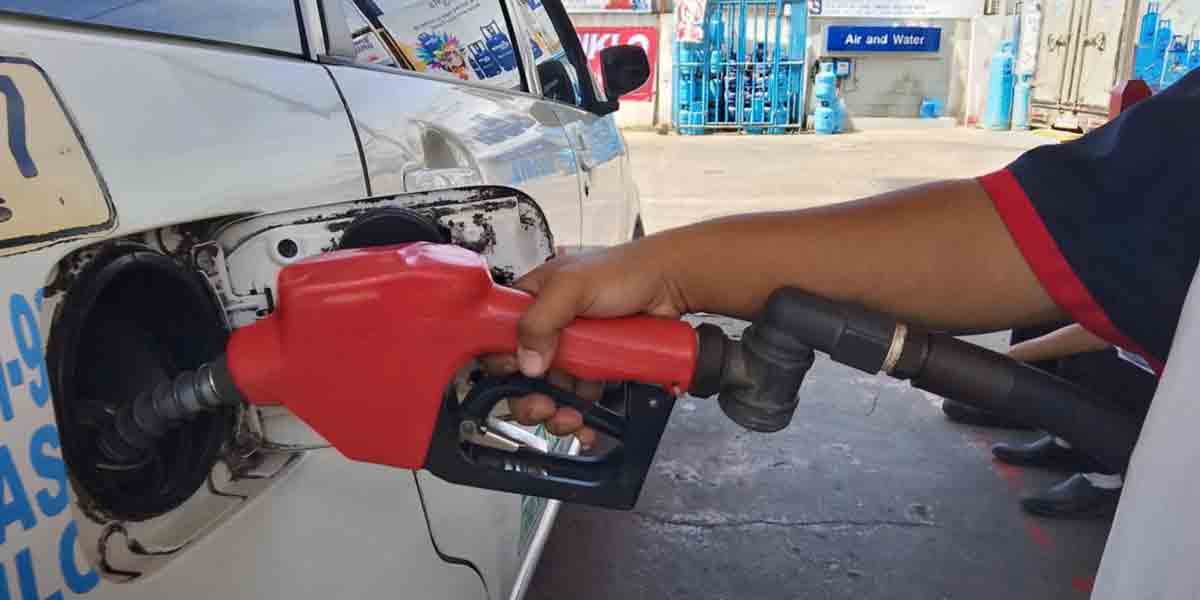
He noted that oil price fluctuations affect not only investor sentiment but also the broader economic outlook for the Philippines, which remains heavily reliant on imported fuel.
“This oil price is really affecting not only investor sentiment, but really the whole economic framework or development in the Philippines. […] [W]e are 96 percent dependent on oil.”
The Philippines imports nearly all of its petroleum requirements, making it one of the most oil-import-dependent economies in Southeast Asia and particularly vulnerable to global supply disruptions.
Monzon said the national government has taken steps to cushion the impact of rising fuel prices.
Among these measures are a four-day workweek for government employees and a proposal to Congress to suspend excise taxes and provide fuel subsidies to consumers.
Monzon acknowledged that the local market has been closely tracking global oil price movements, which have also influenced inflation expectations and investor behavior.
Recent declines in oil prices, from around USD 100 to about USD 80 per barrel, have helped support a modest recovery in the PSE index after earlier declines.
According to Monzon, the key factor investors are watching is how long the Middle East conflict will last.
“I think what our market will be watching out for really is what is the duration of this conflict in the Middle East. Is this something that will hopefully end in a few weeks, like with the ceasefire?” he said.
He warned that a prolonged conflict could significantly disrupt markets.
“In our case, I think, or maybe for all markets, if this Iran conflict is resolved in a couple of weeks, I think markets can recover; damage should be transitory. But if the conflict prolongs then I would say the mark, all bets are off,” Monzon said.
Prior to the geopolitical shock, Monzon said the Philippine market had been showing strong momentum.
However, he noted that the market quickly reversed course following the escalation of tensions.
“The Philippines was experiencing a nascent bull market. We were up eight as of Feb. 27 before the attack on Iran. Our market is up about 18.4% from the November low, just a few percent below the indication of a bull market,” he remarked.
“Then the Feb. 28 incident happened. Of course, our market collapsed from 6,600 all the way to 6,000 last Monday,” he added.
A bull market is generally defined as a sustained rise of 20 percent or more from a recent low, indicating broad investor confidence and upward momentum in stock prices.
Despite heightened volatility, Monzon said planned listings, particularly from the financial technology sector, are still moving ahead.
He cited Maya, the digital banking and financial services arm of PLDT Inc., which is continuing to consider a listing later this year.
“Well as far as the Maya listing is concerned, I think that’s still on. I think it’s happening in the third quarter, their plan,” Monzon shared.
Another anticipated listing is that of Maya’s top rival, GCash, the mobile wallet platform operated by Globe Fintech Innovations Inc., which could potentially become one of the country’s largest IPOs.
Maya and GCash are the two dominant digital finance platforms in the Philippines, collectively serving tens of millions of users and driving the country’s rapid shift toward cashless transactions.
Monzon said regulators have adjusted listing requirements to accommodate the scale of such companies.
“Basically, our requirement for companies doing an IPO is to have a 20 percent public float when they offer their shares,” he said.
“But with the big market cap of GCash we have reached an agreement that they could go as low as 12% of a public float, depending on the market cap of their company at the time of listing,” he added.
Monzon also noted that foreign investors had begun returning to Philippine equities earlier this year after heavy outflows in 2025.
“As of the end of 2025, our net foreign selling in our market was about PHP 51 billion. In the two months from January and February, we recovered half of that. We had net foreign buying of about PHP 25.3 billion,” he said.
However, market volatility following the Feb. 28 escalation led to renewed outflows.
“Since Feb. 28 we’ve had net foreign selling of another two and a half,” he said.
Even so, Monzon emphasized that foreign investors remain engaged in the market.
“But the foreign investors are still present in our market. Like I said, we would have a net foreign buying of about PHP 23.5 billion as of today,” he said.
Monzon added that much of the region’s market outlook, including that of the Philippines, will depend on whether geopolitical uncertainty tied to the Middle East conflict subsides in the coming weeks.