














By Joseph Bernard A. Marzan
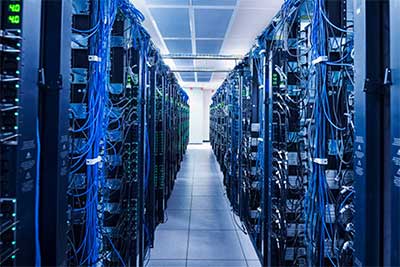
QUEZON CITY—A climate think-tank argued that the rapid expansion of data centers in the Philippines can be transformed from a looming strain on the power grid into a strategic driver of industrialization and clean energy development, if government planning shifts from siloed to integrated.
The Institute for Climate and Sustainable Cities (ICSC), in its latest position paper, Leveraging the Data Centers Opportunity, underscored how the country can harness surging digital infrastructure demand to accelerate its renewable energy transition.
The ICSC noted the sharp rise in the demand for data centers, spurred by exponential data growth and the continuously rapid adoption of artificial intelligence.
While this trend is already straining power systems in many countries, the ICSC said the Philippines is uniquely positioned to turn the challenge into an opportunity by pairing data centers with untapped renewable resources, particularly offshore wind and rooftop solar.
The paper noted that the country’s data center capacity is projected to exceed 500 megawatts by 2028, broadly aligning with the government’s target of sourcing 35 percent of electricity from renewable energy by 2030.
Without coordinated planning, however, growing electricity demand from data centers could aggravate grid congestion and increase dependence on fossil fuels.
Offshore wind was identified as a cornerstone of this opportunity.
Under the Philippine Energy Plan’s CES-2 scenario, offshore wind potential could reach up to 50 gigawatts (GW) by 2040, supported by more than 60 GW in existing service contracts.
Grid limitations, however, threaten to constrain this growth.
Mindoro was cited as a case in point, having a significant share of planned offshore wind developments, and is set to be interconnected with Luzon by 2027 through the Batangas–Mindoro Interconnection Project.
The project’s planned 2-by-600-megawatt (MW) capacity may fall short, as more than 12 GW of offshore wind projects are already in pre-development in Mindoro alone, raising concerns over stranded capacity and high curtailment rates.
The paper also highlighted the largely untapped potential of rooftop solar, citing about 106,000 hectares of viable commercial rooftops nationwide that the ICSC identified via a machine learning-based mapping tool.
But with conservative assumptions on structural limits, shading, and system losses, this translates to an estimated 53 GW of potential capacity, far exceeding the country’s current installed rooftop solar capacity of about 2,500 MW.
The ICSC warned that to compete with regional peers such as Singapore and Thailand, the Philippines must be able to deliver affordable green power.
Failure to do so, it said, could lock the country into greater fossil fuel dependence as electricity demand rises.
To address these challenges, the institute proposed the strategic co-location of data centers and renewable energy projects.
By anchoring electricity-intensive facilities near clean energy sources, the country can create stable demand for renewables, reduce the need for long-distance transmission upgrades, ease grid congestion, and help stabilize prices in the Wholesale Electricity Spot Market.
The paper also raised concerns about power quality, noting that large-scale data centers can generate significant electrical harmonics that may affect voltage and current stability.
This risk is particularly acute in and around Metro Manila, where new data center developments overlap with sensitive, high-value manufacturing zones such as semiconductors and automotive production.
To prevent data center growth from undermining other priority industries, ICSC stressed the need for careful site selection and strict adherence to grid standards.
Among its policy recommendations, the institute called for the creation of Philippine Economic Zone Authority-designated hubs that co-locate renewable energy projects and digital infrastructure in provinces with high clean energy potential.
It also urged the government to require large data center operators to source at least 50 percent of their electricity from renewable energy through long-term power supply contracts or the Green Energy Option Program, with 30 percent prioritized from rooftop solar installations on public and private buildings.
They further recommended that the Transmission Development Plan of the National Grid Corporation of the Philippines explicitly factor in projected data center loads, particularly in renewable-rich areas, to reduce curtailment risks, avoid stranded assets, and ensure that digital growth supports the country’s clean energy goals.
“The Philippines must move from siloed to synergistic planning,” the paper said, arguing that data centers should be treated as a strategic asset for the power system rather than merely an additional load.