















By Francis Allan L. Angelo
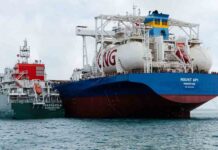
The ongoing conflict in Iran and disruptions in the Strait of Hormuz have laid bare the severe economic vulnerabilities of Asian nations dependent on imported fossil fuels, with energy experts urging a rapid pivot to renewable energy as the only permanent solution for regional energy security and macroeconomic stability.
A briefing note released by the Institute for Energy Economics and Financial Analysis (IEEFA) in March 2026, authored by Research Lead Sam Reynolds and Sustainable Finance Lead Ramnath N. Iyer, warned that crude oil and liquefied natural gas (LNG) prices rose 51% and 77%, respectively, between 27 February and 9 March 2026. The Asia LNG spot benchmark, the Japan-Korea Marker (JKM), spiked 50% over the same period.
Asia’s exposure to the Strait of Hormuz
Over 80% of crude oil and LNG leaving the Strait of Hormuz is destined for Asia, though individual markets face varying levels of exposure. Pakistan, Japan, and the Philippines each sourced over 90% of their crude oil supplies from the Persian Gulf, while Pakistan, India, and Bangladesh sourced the largest share of LNG from Qatar and the United Arab Emirates.
Bangladesh purchased a cargo at USD 28.28 per million British thermal units (MMBtu) — nearly three times JKM prices the previous month — while Pakistan halted LNG purchases altogether. The Philippines and Vietnam, which began importing LNG in 2023 and purchase most cargoes from spot markets, are also highly exposed to price spikes.
Echoes of the 2022 energy crisis
The IEEFA report drew parallels with the 2022 energy crisis triggered by Russia’s invasion of Ukraine. During that episode, annual LNG spending in Pakistan and Bangladesh more than doubled compared to 2021, even though imports declined by 16% and 13%, respectively. Japan’s LNG demand fell by nearly 3%, but annual spending increased 65%. In Thailand, total gas costs skyrocketed by over 141% during the same period.
“The actual usage of LNG in Bangladesh and Pakistan dropped as a result of the crisis in 2022 by 13-15%. But they ended up paying double. So the import bill for Bangladesh, for Pakistan, was double of what it was before, despite using less. Even for a country like Japan, they had 3% less LNG available, but they paid 65% more,” Iyer said during a webinar on 12 March 2026 titled “Securing Asia’s Energy Future Amid the Hormuz Crisis.”
Inflation, currency depreciation, and fiscal strain
The briefing note warned that prolonged escalation could cause energy price spikes to spill over into core economic indicators, including inflation, interest rates, trade balances, and gross domestic product growth, derailing fiscal and monetary goals across the region.
All net oil and gas importing countries in Asia experienced currency depreciation against the US dollar in 2022, the IEEFA found. In the first seven days of the Iran conflict, emerging market currencies faced their worst week since 2020 as traders flocked to safe havens in gold and US dollars.
Governments in Asia are already responding with emergency measures. Thailand has capped diesel prices and may slash fuel taxes. China, Thailand, and some Indian refineries have halted exports of crude and refined products to shore up domestic supplies. The Bangko Sentral ng Pilipinas said it may tighten monetary policy to curb inflation risks if oil prices rise above USD 100 per barrel.
Subsidies and utility solvency risks
The report documented how fiscal measures such as fuel subsidies provide short-term relief but carry significant longer-term costs. Between 2022 and 2024, Japan spent JPY 11 trillion (USD 77 billion) on electricity, gas, and petrol subsidies. Thailand’s Oil Fuel Fund recorded a peak deficit of negative THB 133 billion (negative USD 3.7 billion) in November 2022, with liabilities exceeding 40% of assets. The fund currently holds a surplus of THB 2 billion, but is reportedly spending THB 700 million per day and may return to deficit.
In South Korea, the state-owned Korea Electric Power Corporation came perilously close to bankruptcy in 2022, experiencing an annual operating loss of KRW 32.6 trillion (USD 24.4 billion) as fossil fuel costs skyrocketed while end-user tariffs remained frozen. In the Philippines, San Miguel Global Power faced a severe liquidity crunch in 2022 and 2023 from contractual exposure to global fossil fuel prices, eventually selling 67% of its LNG assets in 2024 to strengthen its balance sheet.
Renewables now cheaper than gas-fired power
The experts made a strong economic case for renewable energy as the long-term solution. At current LNG prices, the IEEFA estimated the levelized cost of electricity (LCOE) from gas-fired power at roughly USD 130–140 per megawatt-hour (MWh), compared to global averages of USD 40/MWh and USD 39/MWh for onshore wind and solar, respectively. Gas turbine costs have also more than doubled to over USD 2,400 per kilowatt in just the last two years.
“At the current prices of gas, we are looking at an LCOE of gas of about $130 per megawatt hour. Now, if you look at the global average for solar and for wind, that’s about $40,” Iyer said.
“We’ve also found that even at 20% higher gas prices from last year, not 50% which we have now, in most countries in Asia, the LCOE for solar and storage together is competitive economically versus the LCOE of gas. So the argument that gas is needed for firm power and renewables is variable no longer holds true, especially at current gas prices. So, we think that Asian economies, Asian policymakers, really have every incentive at this point in time to accelerate the move towards renewables, to bring forward their plans, and to make more ambitious plans, to switch to renewables. It’s a matter of economic security,” he added.
The IEEFA analysis showed that if LNG prices remain 50% above 2025 averages, gas-fired power costs could increase by an estimated 32–37%, while solar power costs would rise by just 3%, even after assuming a 100 basis points increase in the cost of capital. The institute also estimated that every 1 GW of solar could avoid USD 3 billion in LNG import costs over 25 years.
ASEAN’s energy trilemma
Dinita Setyawati, Senior Energy Analyst at Ember, highlighted how reducing import dependence could stabilize economic growth across the region.
“The changes in energy prices might not capture the full extent of inflation, but reducing import dependence could really make the countries stabilize their economic growth,” Setyawati said.
She noted that in Thailand, expanding solar and battery capacity could unlock USD 1.8 billion in savings from gas fuel costs by 2037.
“So renewables, grids, and storage could be the Holy Trinity solutions for the energy dilemma not only for ASEAN, but also for the whole Asia region,” she said.
Setyawati also warned that prolonged oil and gas price volatility could widen the gap between more developed Asian economies and the region’s emerging markets.
Pakistan’s solar cushion against supply shocks
Nabiya Imran, Associate on Energy Insights at Renewables First, presented Pakistan as a case study where consumer-led solar adoption has cushioned the country against the crisis. She noted that LNG now contributes around 20% to Pakistan’s power mix, mainly for nighttime or evening peak demand, because daytime demand has been largely displaced by distributed solar.
“Now, with the unfolding of the crisis, what has happened is that solar has provided a cushioning effect against LNG supply disruption. LNG has contributed to around 20% of our power mix in the fiscal year 2025, but that is mainly for the nighttime or evening peak, because daytime demand has been largely displaced by solar. The impact would have been much worse had solar not been present,” Imran said.
She added that as of February 2026, Pakistan had avoided around USD 12 billion in oil and gas imports because of solar adoption.
“I think Pakistan presents an example or a case study where the consumer-led electrification, consumer-led adoption of solar has provided a cushioning effect against geopolitical shocks, and it gives a practical example as to why it’s not just an economic sense to adopt renewables, it’s also a matter of energy security,” she said.
Imran also urged doubling down on investments in electric vehicles, noting that the transportation sector has been the hardest hit by the oil price surge, with fuel prices in Pakistan rising by about 20% between 2 and 7 March.
“Solar and batteries are also being imported into the country so far, but they are not a recurrent cost. You import them once, and they are a lifetime capital investment, and they can generate electricity for the next few decades. And it’s not just the power sector anymore. There’s a need for electrification in all end users,” she added.
Philippines eyes offshore wind, island hybridization
Gaspar Escobar Jr., Grid Modernization Advisor of the Institute for Climate and Sustainable Cities (ICSC), said the Philippines should leverage its abundant renewable energy resources, including an estimated 60 GW of offshore wind potential identified by the World Bank.
“We will increase our energy independence and energy security by using our local indigenous renewable energy resources,” Escobar said.
“The World Bank already identified a lot of wind corridors in the Philippines, putting potential offshore wind capacity at 60 gigawatts all over the country. That would power not only the whole country, we can also become an exporter of power to our neighbor ASEAN countries,” he added.
Escobar noted that the crisis has hit the Philippines’ off-grid island communities hardest, where 80–90% of power generation relies on diesel. The government is now promoting hybridization of these island systems with solar and batteries, and the ICSC is supporting rooftop solar installations on government facilities and hospitals.
He also questioned the viability of LNG investments in the country’s competitive power market. “If I’m an investor putting a power plant using imported LNG, and our power sector is run by a competitive selection process, meaning you have to bid, how will you get your market if your cost of power will be high?” he said.
Experts warn against policy amnesia
Stefan Bößner, Research Fellow and Policy Lead at the Stockholm Environment Institute Asia, pointed out that international bodies have consistently underestimated how fast renewable energy costs would fall.
“More than 2,000 papers, reports, policy briefs have forecasted how solar power will decrease in price, and over 90% of all the sources analyzed assumed a 2.5% reduction in costs. The most optimistic assumed a 6% reduction in cost. However, the actual cost reduction was 15%. Meaning the IEA and other international bodies have a tendency of overestimating the cost of renewable energy and underestimating its cost reduction potential,” Bößner said.
He cautioned, however, that policymakers have a tendency to forget the lessons of energy crises once prices stabilize.
“Policymakers are sometimes not as good in responding to shock, or their initial response is: oh diversify. And then when normality comes back, they tend to forget,” Bößner said.
He called for structural changes across Asia, including reformed market structures, modernized grid infrastructure, changed consumer behavior, economic diversification in coal-dependent regions, and enhanced governance.
Caroline Baxter, Director of the Converging Risks Lab at the Council on Strategic Risks, said oil prices have skyrocketed past USD 100 a barrel since the beginning of the military operation, with prices in Vietnam rising almost 50%, followed by Laos at 33%, Cambodia at 19%, and Australia at 18%.
“Renewable energy must have a spot at the table in order to unleash the full potential of national resilience — the ultimate goal of any nation and therefore any energy forum,” Baxter said.
A permanent solution
Iyer underscored that the renewable energy supply chain is fundamentally different from the fossil fuel supply chain in its vulnerability to disruption.
“The fossil fuel supply chain is dependent on day in, day out, while for renewables, once you put it, you’re done for 20 years, 25 years, 30 years. There’s no supply chain disruption. The renewable supply chain is significantly less affected than the fossil fuel supply chain,” he said.
The IEEFA briefing note concluded that regardless of the length of the conflict, fossil fuel importing countries will remain perpetually vulnerable to commodity market shocks, and that renewable energy is not only a climate imperative but the only permanent solution for energy and economic security.