




By John Anthony S. Estolloso
There are dissimilitudes displayed inside historic Balay Sueño.
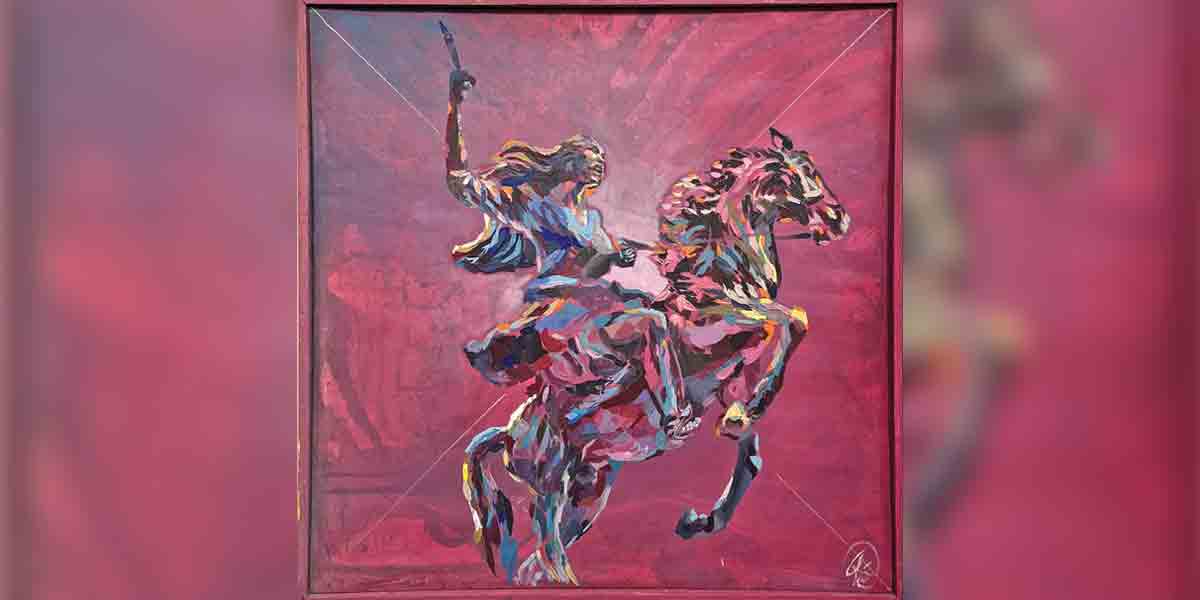
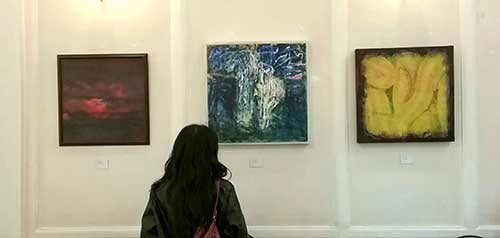
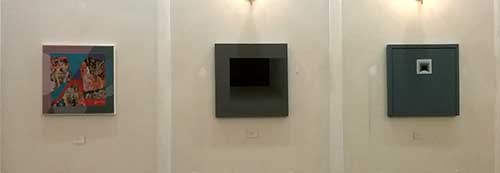
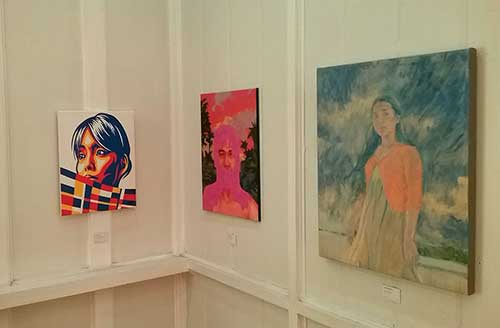
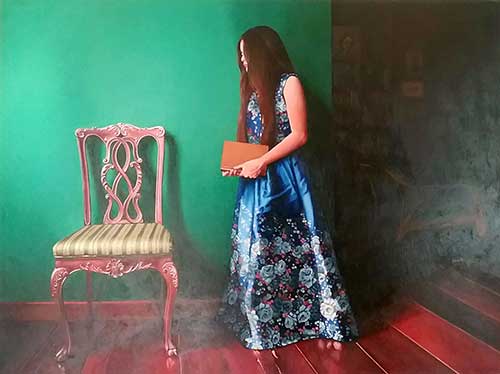
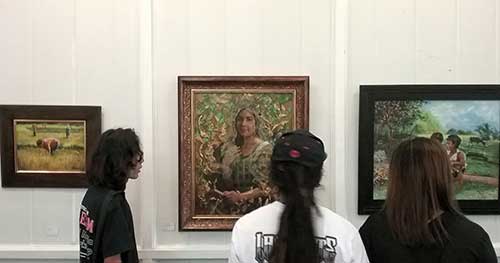
Enter the antiquated house one of these days and you will find hanging on its timeworn walls a plethora of contemporary art. Take your pick: surreal dreamscapes, contorted portraits, cubist iterations, abstractions, installations, hodgepodges of media and color, and on that vernissage on the afternoon of March 14, performance art.
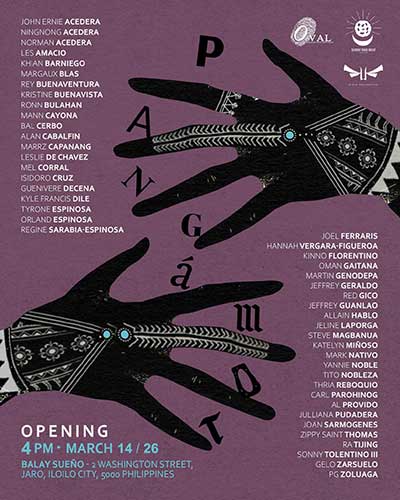
This is Kikik Kollektive’s PANGAMOT, a fundraising art exhibit coordinated with local art groups, intended for a folk gathering of artists and performers slated sometime this year at Abilay Sur, Oton. Looking ahead to this kadunaan, this coming together to celebrate a life dedicated to farm and field, the art on display appears to foreshadow the idyllic assembly. The sparse exhibit notes bannering Balay Sueño’s portico enumerates these bucolic themes: umá, luták, ambahánon, ritwal, sugilánon. Here, pastoral elements are invoked and projected on sundry materials and in various iterations.
Resonant to this, the exhibit’s title holds a duality of meanings and they are worth pondering. For one, the title could refer to a contribution to a cause (ámot); on the other hand [kamót, pun intended], it could refer to the act of handling with care, to tend, to grasp, or to manage with skill – the way a farmer tills the land or a painter navigates the brush on the canvas.
The common denominator is toil – whether perceived as the talents of the artist put into the crafting of the art or the mundane subjects hallowed as the souls of the artworks.
Still, truly yours cannot comprehensively write about all the artworks displayed. Given a cursory walk through and glance, the collection of art is quite overwhelming. With works by 46 artists from all over Panay, the eclecticism and range of the display is sprawling, as if to refract the spaciousness of the location on which these are displayed.
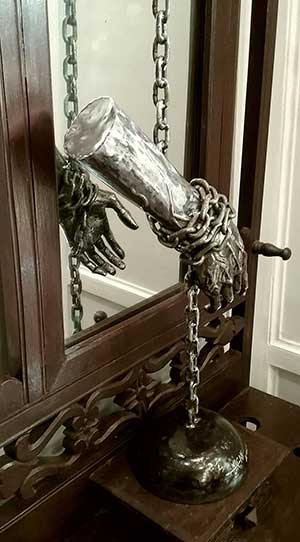
As such, there is no single chamber to contain the art. On tables, cabinets, and even on the staircase’s newel post, sculptural pieces make their appearance: Tyrone Espinosa’s inlayed block of polished wood studded with eye-like configurations appears to ogle at prospective connoisseurs from its precarious pedestal. A surreptitious installation by Zippy Saint Thomas demurely keeps to its quiet corner, inviting the viewer to scrutinize it closely.
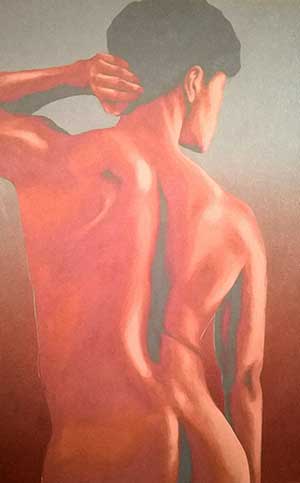
At the foyer hangs a Sonny Tolentino portrait; at the other room are Les Amacio’s iconic geometric arrangements. Lining the stairs’ landing are pink-hued frames of Allain Hablo, his iconic minimalist canvases refracting the late afternoon glare from the house’s balcony. Tito Nobleza’s portraits glimmer with an Amorsolo-like quality to the brushwork and the hues used, while Kinno Florentino’s impressionist take on a familiar figure seems to complement the realism of the former. Mann Cayona’s images of the three martyred priests interwoven through escapes historicity with its distortion of faces. Contrasting the downplayed religiosity of the portraits, a vibrant dorsal of a nude form bursts in vivid colors with the distinct choice of hues that can only be ascribed to Gelo Zarsuelo.
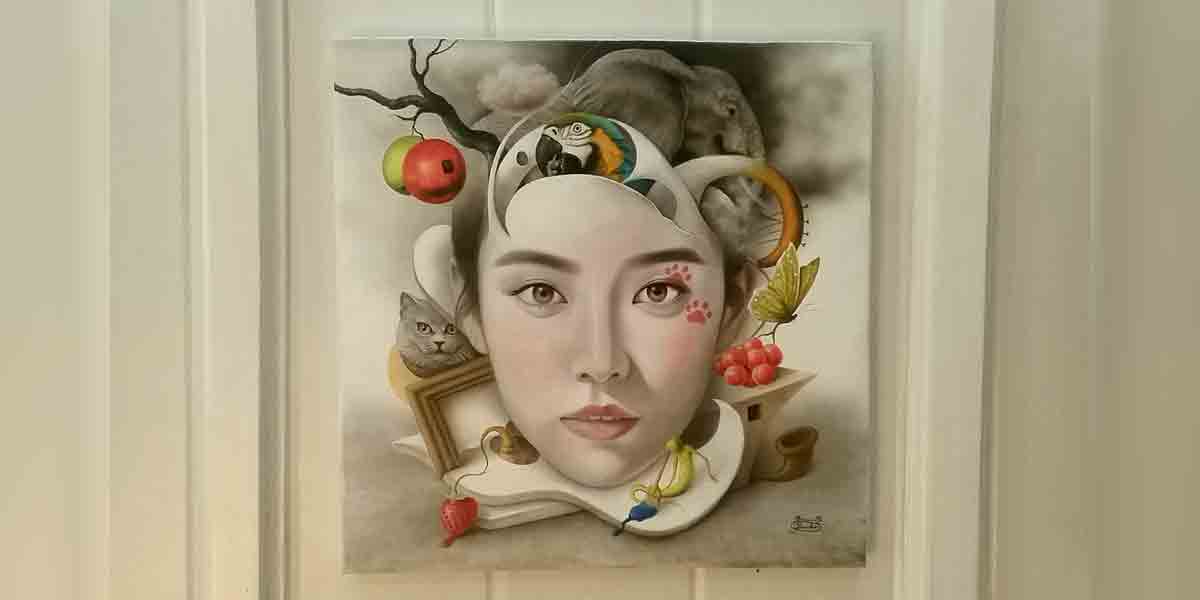
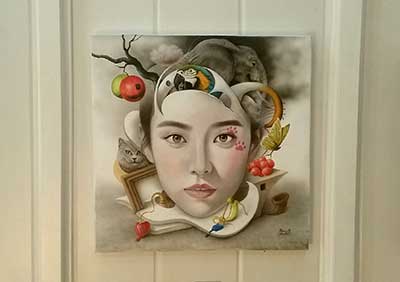
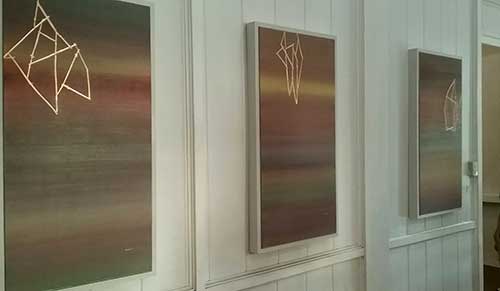
Punctuating these human faces and figures are abstractions by Katelyn Miñoso, her splotches of leaden colors accenting the flashier hues of canvases beside hers. Mark Rene Nativo’s surreal arrangements reposition realistic images in contorted dreamscapes, a usual technique employed by the artist. Abstractions by Martin Genodepa recall the modern, in its contemporary sense, redolent of Rothko’s experimentations with color.
And there are so much more, so much more than meets the eye and feeds the soul. In Balay Sueño, it would seem that the assembly of art has come forthwith long before the assembly of men.
* * * * *
In the Catholic rite of offertory prayers, the priest elevates the ‘fruit of the earth and work of human hands’ as the matter of the sacrament; they become worthy oblations to the Divine. In like sense, we find these works of human hands as elevations of the divinely creative capacities of man.
And what is being offered? The ordinary – or more aptly, the ordinariness of things that thrive and survive. In the daily tilling of the soil and the sowing of seeds, in the toiling through muck and mud, in the plaintive songs and stories, in the rite and ritual of farm and field, there is substance transcendent of the humdrum and the trite.
Depende sa pangamot…
(The writer is a language and literature teacher in one of the private schools of the city.)